
📍 Bahraich | June 21, By: Shamikh Rais Siddiqui
✨ In a significant step towards women empowerment, self-reliance and sustainable livelihoods, a five-day Food Processing Training Programme concluded successfully in Bardiya village of Bahraich district under the WII-NMCG ‘Jalaj’ Project, implemented by the Wildlife Institute of India (WII).
🌾 Empowering Riverbank Communities
The training, held from June 17 to 21, aimed to equip women from riverbank communities with practical skills in food processing and value addition of local agricultural produce. A total of 25 women, primarily from the Tharu tribal community, enthusiastically participated in the programme.
🍋🥭🌶️ Learning Value-Added Food Production
Participants received hands-on training in preparing a range of marketable food products, including:
✅ Mango Pickle
✅ Jackfruit Pickle
✅ Chilli Pickle
✅ Garlic Pickle
✅ Turmeric Pickle
✅ Aam Papad (Mango Fruit Leather)
✅ Urad Papad
✅ Tomato Ketchup 🍅
✅ Nutritious Moringa Laddus 🌿🍬
The initiative promotes traditional food preservation methods while creating new income-generation opportunities for rural women.
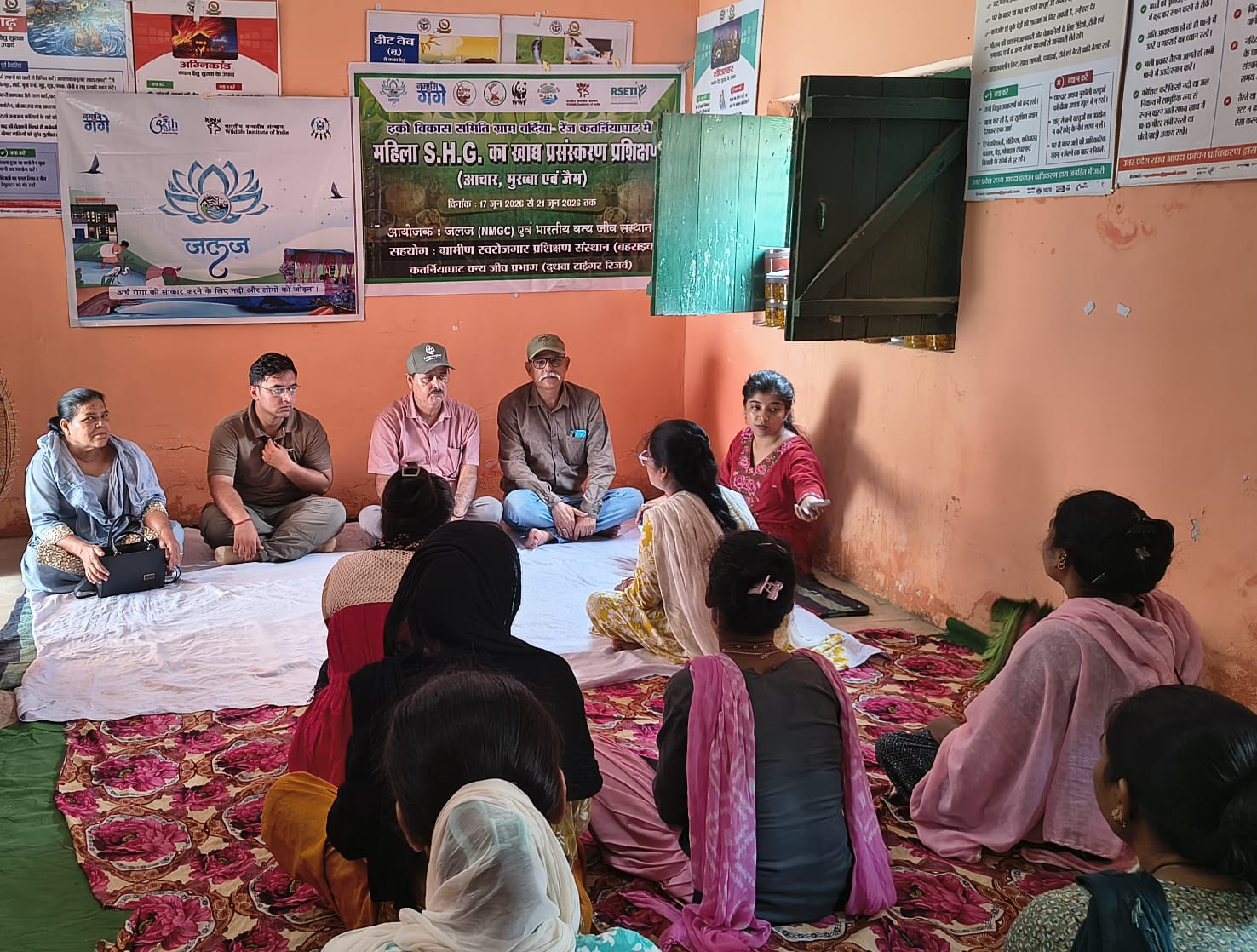
👩🏫 Expert Guidance & Practical Training
The sessions were conducted by Nidhi Mishra and Shivani Pundir, while technical guidance and demonstrations were provided by Anita Mishra, an expert trainer from RSETI.
Participants gained practical experience in:
🔹 Cleaning & Sorting
🔹 Peeling & Cutting
🔹 Mixing & Processing
🔹 Preservation Techniques
🔹 Packaging 📦
🔹 Safe Storage Methods
🎓 Valedictory Session Marks Successful Conclusion
The programme concluded with a special ceremony attended by distinguished guests, including:
⭐ Dabir Hasan, Senior Project Officer, WWF-India
⭐ Shivkant Sharma, Sub-Divisional Officer (SDO)
⭐ Ashish Gaur, Forest Range Officer, Katarniaghat Wildlife Division
👏 The guests lauded the efforts of WII and the ‘Jalaj’ Project in strengthening the livelihoods of rural and tribal women. They highlighted food processing as an effective tool for:
💰 Income Generation
📉 Reducing Post-Harvest Losses
🚀 Promoting Women Entrepreneurship
🏪 Encouraging Small-Scale Enterprises
🌍 Linking Conservation with Livelihoods
Officials said the training reflects the broader vision of the ‘Jalaj’ Project, which seeks to connect biodiversity conservation with community development and sustainable livelihood opportunities.
💪 By providing practical livelihood skills, the initiative is helping women become economically independent while contributing to the inclusive development of riverbank communities.
🌟 The successful completion of the programme marks another important milestone in community empowerment, women’s entrepreneurship and sustainable development in the Katarniaghat region. 🌿🤝👩🌾
Leave a Reply